




History and Traditions
Skiathos is perhaps the only island known by the same name throughout the centuries. Many historical writers and geographers, Greek and Latin, dealt with the etymology of the name “Skiathos”. Three theories prevail. The first, approaches the subject in an etymological manner: it’s a compound word from “skia” (shadow) and “Athos” (the name of the Holy Mount and the peninsula of Athos), so as far as this theory is concerned, the name of the island has to do with it being in the shadow of the Holy Mount of Athos.
According to another theory, the name relates to the small
town “Skia” of Euboea, from where the Chalcidians started
arriving to the island. The third and most likely version
connects the name of the island to the rich shadow cast by the
numerous trees. Alexandros Papadiamantis agreed with those
that thought that the name “Skiathos” is pre-Hellenic and
given to the island by its first settlers, the Pelasgians during
the Hellenistic period, having been impressed by the abundant
shadow cast by the tall trees.
Various prehistoric findings prove that the island has been
inhabited since the prehistoric times, without making it known
exactly by whom. The island has a rich tradition in shipbuilding
and, combined with its fertile ground, was a special place
of rest for the travellers. It is believed that Jason and the
Argonauts as well as the Greek fleet stopped in Skiathos
before continuing their journey to Troy. In the 7th century
BC, the Chalcidians settled here and the island had a strategic
town “Skia” of Euboea, from where the Chalcidians started
arriving to the island. The third and most likely version
connects the name of the island to the rich shadow cast by the
numerous trees. Alexandros Papadiamantis agreed with those
that thought that the name “Skiathos” is pre-Hellenic and
given to the island by its first settlers, the Pelasgians during
the Hellenistic period, having been impressed by the abundant
shadow cast by the tall trees.
Various prehistoric findings prove that the island has been
inhabited since the prehistoric times, without making it known
exactly by whom. The island has a rich tradition in shipbuilding
and, combined with its fertile ground, was a special place
of rest for the travellers. It is believed that Jason and the
Argonauts as well as the Greek fleet stopped in Skiathos
before continuing their journey to Troy. In the 7th century
BC, the Chalcidians settled here and the island had a strategic
place in the Persian Wars of 5th c. BC. The biggest disaster
was during the 2nd c. BC when Philip III plundered the island
in order to prevent the Romans from invading and conquering
it. The island enjoyed a degree of freedom during the roman
and byzantine era until the venetian time, in the 13th century.
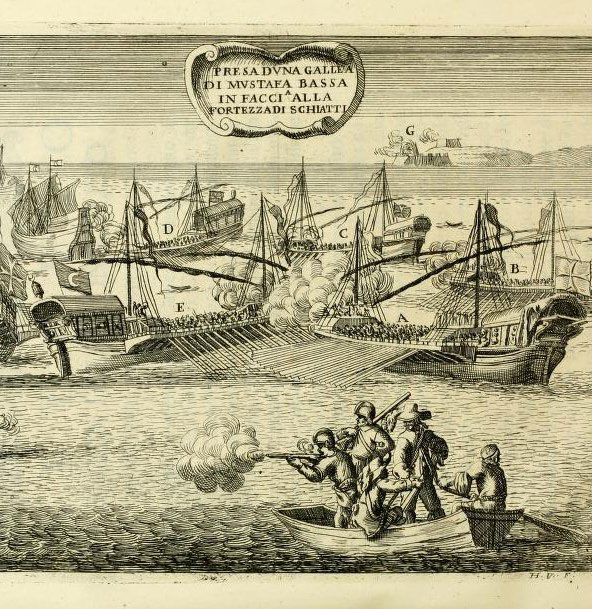
During the Middle Ages Skiathos is constantly attacked by
pirates and its citizens move to Kastro to do everything in
their power to protect themselves. The final blow was cast in
1538 with the Turkish invasion. After a week of defence, the
Turks invade Kastro killing men, women and children. In 1770,
the island took part in the victorious naval battle of Çeşme,
on the side of the Russian admiral Alexei Orlov. A while later,
it offered men and ships to Lambros Katsonis who at the
time was making defiant moves against the Turks by raiding
the Turkish coastline and attacking Turkish ships. The island
was finally freed in 1829. Since then, it has been a quiet place
except for WWII when the Germans set it on fire.
was during the 2nd c. BC when Philip III plundered the island
in order to prevent the Romans from invading and conquering
it. The island enjoyed a degree of freedom during the roman
and byzantine era until the venetian time, in the 13th century.
During the Middle Ages Skiathos is constantly attacked by
pirates and its citizens move to Kastro to do everything in
their power to protect themselves. The final blow was cast in
1538 with the Turkish invasion. After a week of defence, the
Turks invade Kastro killing men, women and children. In 1770,
the island took part in the victorious naval battle of Çeşme,
on the side of the Russian admiral Alexei Orlov. A while later,
it offered men and ships to Lambros Katsonis who at the
time was making defiant moves against the Turks by raiding
the Turkish coastline and attacking Turkish ships. The island
was finally freed in 1829. Since then, it has been a quiet place
except for WWII when the Germans set it on fire.
Prehistoric Times (3000 BC - 800 BC)
The history of Skiathos has deep roots and begins in prehistoric
times. The beauty of the environment, the safe and spacious
harbour that’s protected by four verdant isles, its rich
land and sea, made Skiathos a very attractive settlement for
the moving tribes during the prehistoric times. It was a resting
stop both for the Argonauts on their way to Colchis and the
Hellenic fleet under the command of Agamemnon during its
campaign against Troy.

The history of Skiathos has deep roots and begins in prehistoric
times. The beauty of the environment, the safe and spacious
harbour that’s protected by four verdant isles, its rich
land and sea, made Skiathos a very attractive settlement for
the moving tribes during the prehistoric times. It was a resting
stop both for the Argonauts on their way to Colchis and the
Hellenic fleet under the command of Agamemnon during its
campaign against Troy.
Archaic Era (8th - 5th century BC)
Around the 8th or 7th c. BC, the Chalcidians came to the island.
They were Ionians that, during one of their expeditions to
establish communities in Chalkidiki, took over Skiathos and
established a settlement in the southeast, exactly where
the modern town of Skiathos is. The settlement was on high
ground to dominate the entire bay and internal double port
and it was surrounded by a wall of big crude square marbles
and two gates. This settlement survived all through the
Classic, Hellenistic and Byzantine era up until the point when
the medieval town, Kastro, was established on the north of
the island.
Around the 8th or 7th c. BC, the Chalcidians came to the island.
They were Ionians that, during one of their expeditions to
establish communities in Chalkidiki, took over Skiathos and
established a settlement in the southeast, exactly where
the modern town of Skiathos is. The settlement was on high
ground to dominate the entire bay and internal double port
and it was surrounded by a wall of big crude square marbles
and two gates. This settlement survived all through the
Classic, Hellenistic and Byzantine era up until the point when
the medieval town, Kastro, was established on the north of
the island.
Classic Era (480 BC - 323 BC)
According to Herodotus, Skiathos played a leading part
during the Persian Wars. Indeed, in 480 BC, the inhabitants
of Skiathos positioned in “Pyrgi” used torches to warn the
Greeks in Euboea that the Persian fleet had left Thessaloniki
and was about to cross the passage between Magnesia and
Skiathos.
In 478, Skiathos became a member of the Delian (or
First Athenian) League. Thus, on the one hand, it gained
independence but on the other it was forced to pay an annual
tax to maintain the league’s fleet.
According to Herodotus, Skiathos played a leading part
during the Persian Wars. Indeed, in 480 BC, the inhabitants
of Skiathos positioned in “Pyrgi” used torches to warn the
Greeks in Euboea that the Persian fleet had left Thessaloniki
and was about to cross the passage between Magnesia and
Skiathos.
In 478, Skiathos became a member of the Delian (or
First Athenian) League. Thus, on the one hand, it gained
independence but on the other it was forced to pay an annual
tax to maintain the league’s fleet.
Hellenistic Era (323 BC - 30 BC)
The island pops back up historically during the years of Philip
V of Macedon (279-238 BC) who at the time was in war with
the Romans. Skiathos suffered a lot at the time because it was
all around it that the warfare unfolded.
During the Second Macedonian War in 200 BC, Philip gives
the order to destroy both Skiathos and Skopelos, so that they
don’t fall into the wrong hands. Indeed, on the same year, the
Roman fleet and the fleet of Attalus I, a Roman ally, reach
the island and loot everything left standing after Philip’s
devastation.
The island pops back up historically during the years of Philip
V of Macedon (279-238 BC) who at the time was in war with
the Romans. Skiathos suffered a lot at the time because it was
all around it that the warfare unfolded.
During the Second Macedonian War in 200 BC, Philip gives
the order to destroy both Skiathos and Skopelos, so that they
don’t fall into the wrong hands. Indeed, on the same year, the
Roman fleet and the fleet of Attalus I, a Roman ally, reach
the island and loot everything left standing after Philip’s
devastation.
Byzantine (1204 - 330) and Venetian Era (1538 - 1204)
Very few things are known for Skiathos during the early
Byzantine era.
We only know that in 325 AD the residents of the island begun
converting to Christianity and that in 530 AD, Skiathos became
an episcopal see belonging to the Metropolis of Larissa and
that the first church, Trinity, was built. Also, in 758 AD the
Byzantine fleet -which aided Thessaloniki when it was about
to be attacked by the Slavs and Bulgarians- was moored in
Skiathos.
Very few things are known for Skiathos during the early
Byzantine era.
We only know that in 325 AD the residents of the island begun
converting to Christianity and that in 530 AD, Skiathos became
an episcopal see belonging to the Metropolis of Larissa and
that the first church, Trinity, was built. Also, in 758 AD the
Byzantine fleet -which aided Thessaloniki when it was about
to be attacked by the Slavs and Bulgarians- was moored in
Skiathos.
Turkish Rule (1821 - 1538)
While mainland Greece falls into the hands of the Turks, it was
the Venetians that ruled Skiathos until 1538, when the island
was once and for all conquered by the Ottomans: the Turk
corsair/Grand-Admiral Hayreddin Barbarossa takes advantage
of the turning of some residents against the Venetians to
takes over Kastro after a 6day siege, commencing the almost
3 centuries of Turkish rule of the island.
While mainland Greece falls into the hands of the Turks, it was
the Venetians that ruled Skiathos until 1538, when the island
was once and for all conquered by the Ottomans: the Turk
corsair/Grand-Admiral Hayreddin Barbarossa takes advantage
of the turning of some residents against the Venetians to
takes over Kastro after a 6day siege, commencing the almost
3 centuries of Turkish rule of the island.
Greek Revolution 1821
Despite the fact that it was far from the base of operations
and a sitting duck for the Turkish fleet, Skiathos was soon on
the side of the Greek Revolution.
The services of the residents of Skiathos, mostly marine ones,
during the uprising of ’21 were significant. In 1770, the island
took part in the Orlov revolt, the naval battle of Çesme under
the leadership of the Russian Admiral Alexei Orlov. The prerevolution moves of the Armatoloi (militia) and the Klepht (Brigands) of Olympus after the Orlov revolt continue in Skiathos and Skopelos from 1806 until 1816.
Despite the fact that it was far from the base of operations
and a sitting duck for the Turkish fleet, Skiathos was soon on
the side of the Greek Revolution.
The services of the residents of Skiathos, mostly marine ones,
during the uprising of ’21 were significant. In 1770, the island
took part in the Orlov revolt, the naval battle of Çesme under
the leadership of the Russian Admiral Alexei Orlov. The prerevolution moves of the Armatoloi (militia) and the Klepht (Brigands) of Olympus after the Orlov revolt continue in Skiathos and Skopelos from 1806 until 1816.
Beginning of the 19th Century and German Occupation
Between 1914 and 1919, Skiathos became a refuge for the
Asia Minor Greeks escaping from Agia Paraskevi - Çesme in
Asia Minor due to the persecution by the Turks. When they
found out that the Turkish acts of violence ceased, they
gradually returned to Asia Minor. After the «Asia Minor
Disaster» of 1922, the same families returned permanently in
the island, enriching the population, civilisation and economy
of the island.
During WWII, the German Occupation and the Greek
Resistance, Skiathos particularly stood out both because
it formed an escape network for the Allies and because
hundreds of residents of the island became directly involved
in the fight.
Between 1914 and 1919, Skiathos became a refuge for the
Asia Minor Greeks escaping from Agia Paraskevi - Çesme in
Asia Minor due to the persecution by the Turks. When they
found out that the Turkish acts of violence ceased, they
gradually returned to Asia Minor. After the «Asia Minor
Disaster» of 1922, the same families returned permanently in
the island, enriching the population, civilisation and economy
of the island.
During WWII, the German Occupation and the Greek
Resistance, Skiathos particularly stood out both because
it formed an escape network for the Allies and because
hundreds of residents of the island became directly involved
in the fight.
Recent Years
During the last quarter of the 20th century, the look of
Skiathos island, the lifestyle and many of the habits and
attitudes of its residents changed drastically. Tourism - mass
foreign tourism in particular- dominated and caused most of
the locals and the countless internal and foreign immigrants
of the island to turn exclusively to this sector in order to make
a living. In the beginning of the 70s, Skiathos airport was
constructed -boosting the economy of the island even further.
During the last quarter of the 20th century, the look of
Skiathos island, the lifestyle and many of the habits and
attitudes of its residents changed drastically. Tourism - mass
foreign tourism in particular- dominated and caused most of
the locals and the countless internal and foreign immigrants
of the island to turn exclusively to this sector in order to make
a living. In the beginning of the 70s, Skiathos airport was
constructed -boosting the economy of the island even further.
Maritime History
Due to its position and its safe port, Skiathos was meant to
play a big part both in the shipbuilding and seafaring tradition.
The relationship of Skiathians with shipping begun centuries
ago and it still evolves seamlessly to this day.
In 478 BC, Skiathos became a member of the Delian (or
First Athenian) League paying an annual tax to maintain the
league’s fleet. Later, they acceded to the Second Athenian
League. During the war of the Athenians against Philip II of
Macedon, the island was used as a naval base of operations,
according to Demosthenes. During the turbulent years that
followed, Macedonians, Romans, Venetians and Ottomans
used Skiathos as a base from which they set to accomplish
their conquering plans.
Due to its position and its safe port, Skiathos was meant to
play a big part both in the shipbuilding and seafaring tradition.
The relationship of Skiathians with shipping begun centuries
ago and it still evolves seamlessly to this day.
In 478 BC, Skiathos became a member of the Delian (or
First Athenian) League paying an annual tax to maintain the
league’s fleet. Later, they acceded to the Second Athenian
League. During the war of the Athenians against Philip II of
Macedon, the island was used as a naval base of operations,
according to Demosthenes. During the turbulent years that
followed, Macedonians, Romans, Venetians and Ottomans
used Skiathos as a base from which they set to accomplish
their conquering plans.
Bourtzi
Bourtzi is a small peninsula that splits the port of Skiathos
in two: into the old port and the new one. It was a fortress
built during the Venetian Rule by the Ghisi brothers who took
over the island in 1207, after the fall of Constantinople to the
Crusaders.
It was surrounded by ramparts and crenelations and there
was a round tower on each side of the gate. In addition, the
fortress had a tank and a chapel dedicated to Saint George,
protector of the Venetians, probably built as well by the Ghisi
brothers. The fortress was destroyed in 1660 when the island
was occupied by the Venetian admiral Francesco Morosini.
There are few remnants of the old fortress so the height that
the surrounding wall used to have cannot be determined.
In 1823, with the help of the dilapidated crenelations, the
inhabitants of the island, both local and refugees, managed to
drive the Pasha back.
Bourtzi is a small peninsula that splits the port of Skiathos
in two: into the old port and the new one. It was a fortress
built during the Venetian Rule by the Ghisi brothers who took
over the island in 1207, after the fall of Constantinople to the
Crusaders.
It was surrounded by ramparts and crenelations and there
was a round tower on each side of the gate. In addition, the
fortress had a tank and a chapel dedicated to Saint George,
protector of the Venetians, probably built as well by the Ghisi
brothers. The fortress was destroyed in 1660 when the island
was occupied by the Venetian admiral Francesco Morosini.
There are few remnants of the old fortress so the height that
the surrounding wall used to have cannot be determined.
In 1823, with the help of the dilapidated crenelations, the
inhabitants of the island, both local and refugees, managed to
drive the Pasha back.
Days of honour and commemoration
Skiathos island maintains centuries old cultural behaviours
and customs which aren’t presented as tourist attractions
but instead constitute an integral part of the everyday life of
residents and visitors.
The celebration of the 21st of November is a religious event
of great importance since Panagia (Virgin Mary) Iconistra
is the patron protectorof Skiathos island. With faith and devotion,
the icon of Panagia is transferred through a procession from the
Three Holy Hierarchs Church, the place where it is kept, to the
Monastery of Iconistra, the place where it was found. The
image is transferred from hand to hand and a large crowd
accompanies it on foot, along a route that takes about three
hours. A Vigil follows and in the early hours of the morning,
the icon returns to town, followed yet again by the faithful.
Another celebration of behalf of Iconistra is held on the first
Sunday of July.
Skiathos island maintains centuries old cultural behaviours
and customs which aren’t presented as tourist attractions
but instead constitute an integral part of the everyday life of
residents and visitors.
The celebration of the 21st of November is a religious event
of great importance since Panagia (Virgin Mary) Iconistra
is the patron protectorof Skiathos island. With faith and devotion,
the icon of Panagia is transferred through a procession from the
Three Holy Hierarchs Church, the place where it is kept, to the
Monastery of Iconistra, the place where it was found. The
image is transferred from hand to hand and a large crowd
accompanies it on foot, along a route that takes about three
hours. A Vigil follows and in the early hours of the morning,
the icon returns to town, followed yet again by the faithful.
Another celebration of behalf of Iconistra is held on the first
Sunday of July.
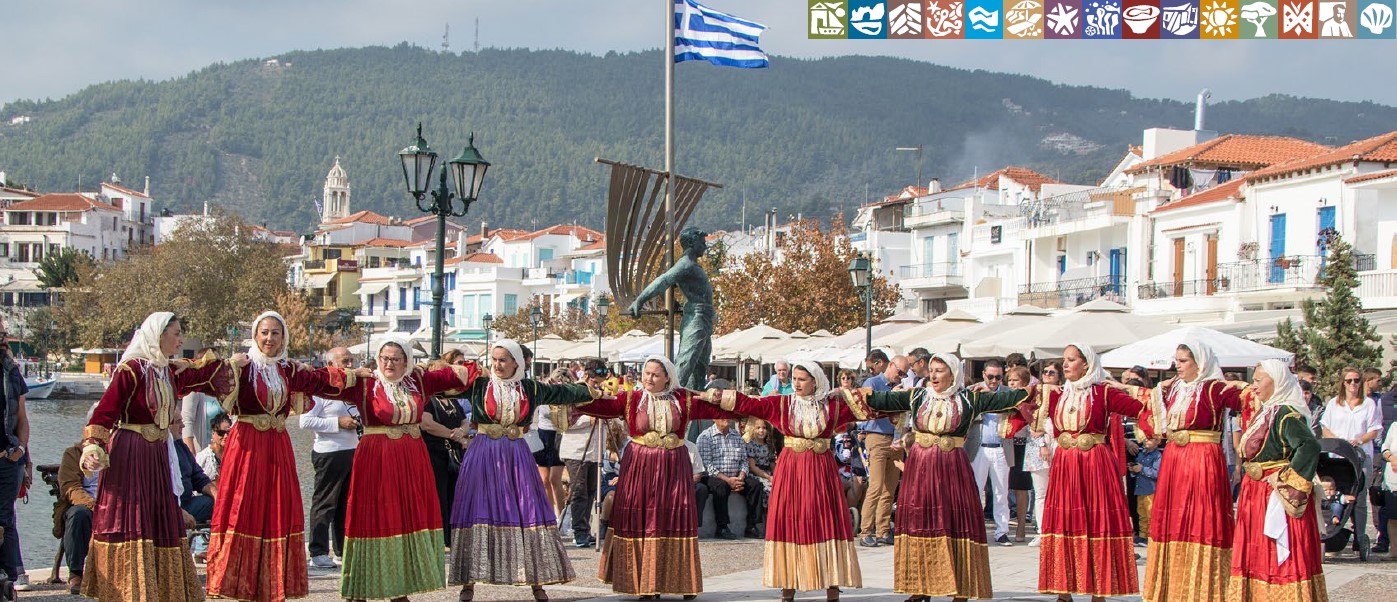
Costumes
A couple of centuries ago, men and women used to wear the
traditional Skiathian costume.
The men were wearing breeches and a big fez with a long
tassel. Their dress looked like the one worn in Hydra. A few
years after the Revolution of 1821 though, they started
replacing their breeches with trousers and doublets. In a very
short period of time, the displacement of the traditional male
costume was generalised and it’s been almost a hundred years
since the last “breecher” of Skiathos passed away. That’s the
reason why the traditional male costume of Skiathos cannot
even be described today.
A couple of centuries ago, men and women used to wear the
traditional Skiathian costume.
The men were wearing breeches and a big fez with a long
tassel. Their dress looked like the one worn in Hydra. A few
years after the Revolution of 1821 though, they started
replacing their breeches with trousers and doublets. In a very
short period of time, the displacement of the traditional male
costume was generalised and it’s been almost a hundred years
since the last “breecher” of Skiathos passed away. That’s the
reason why the traditional male costume of Skiathos cannot
even be described today.